
Digital Signage Use Case — Organic Supermarket as a Digital In-Store Communication Platform
Using a multi-location organic supermarket chain as an example: how digital screens can first strengthen owned communication, sales activation and sustainability themes — with recruiting as a secondary layer and retail media only in the next step.
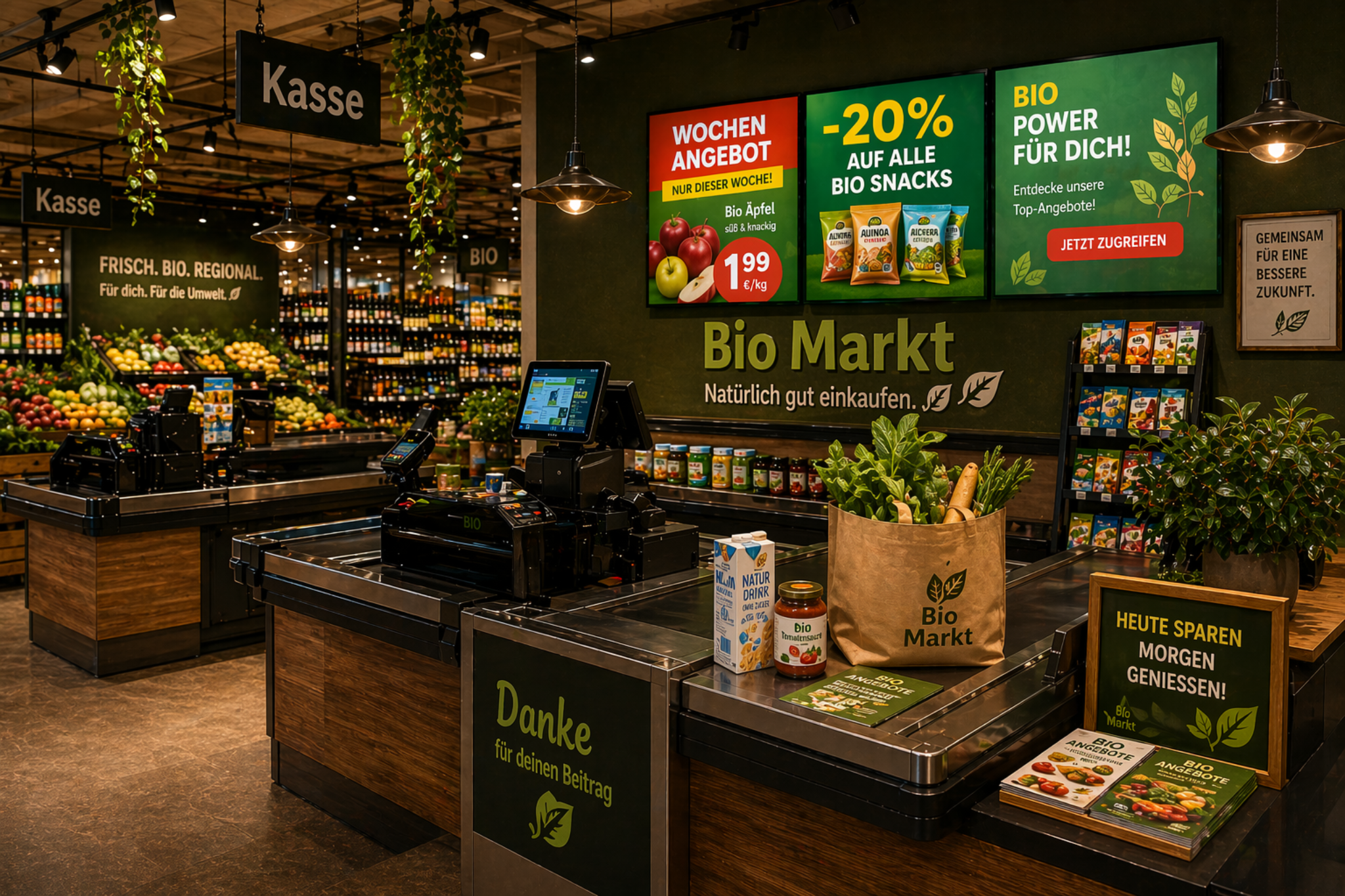
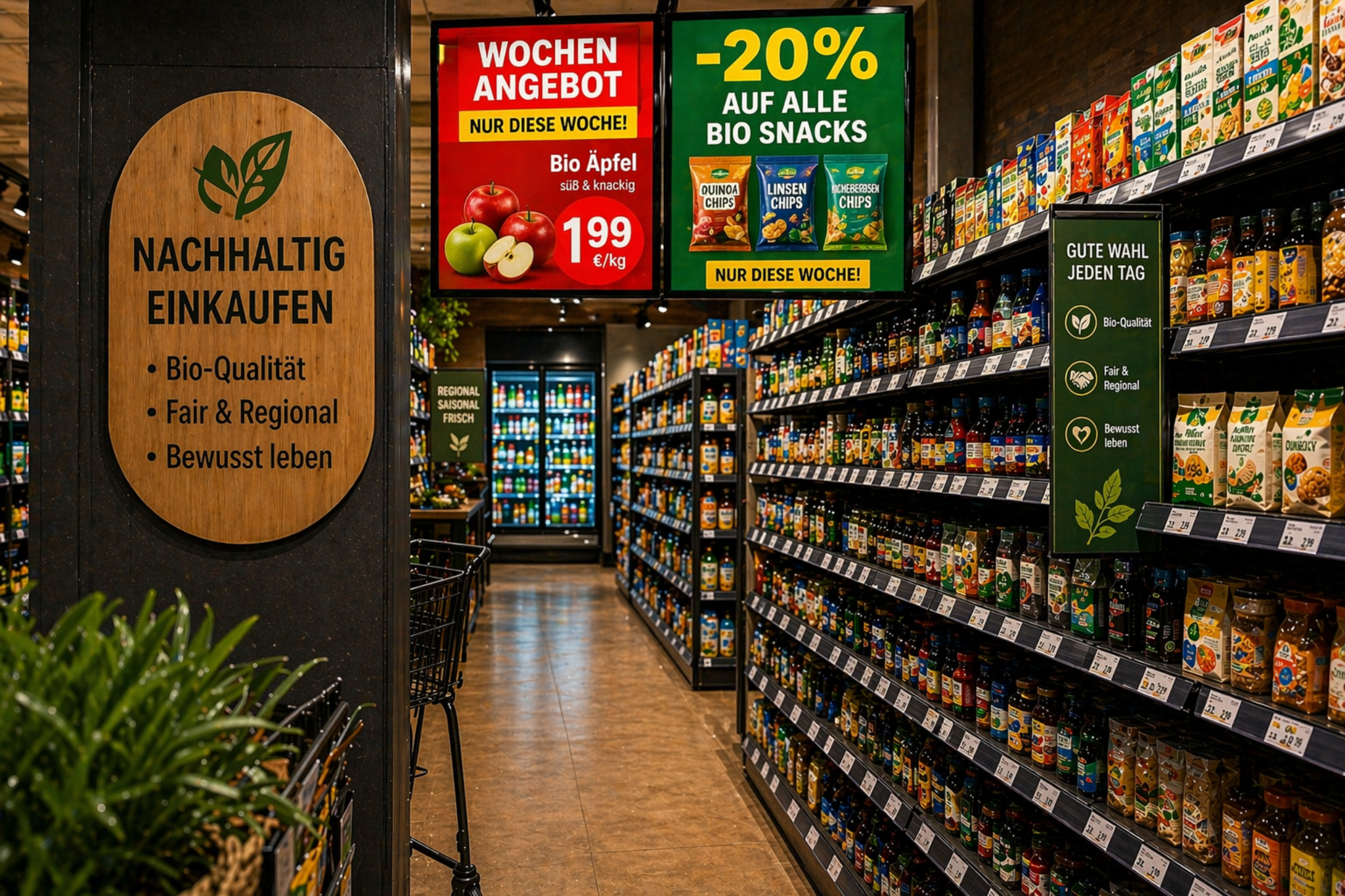
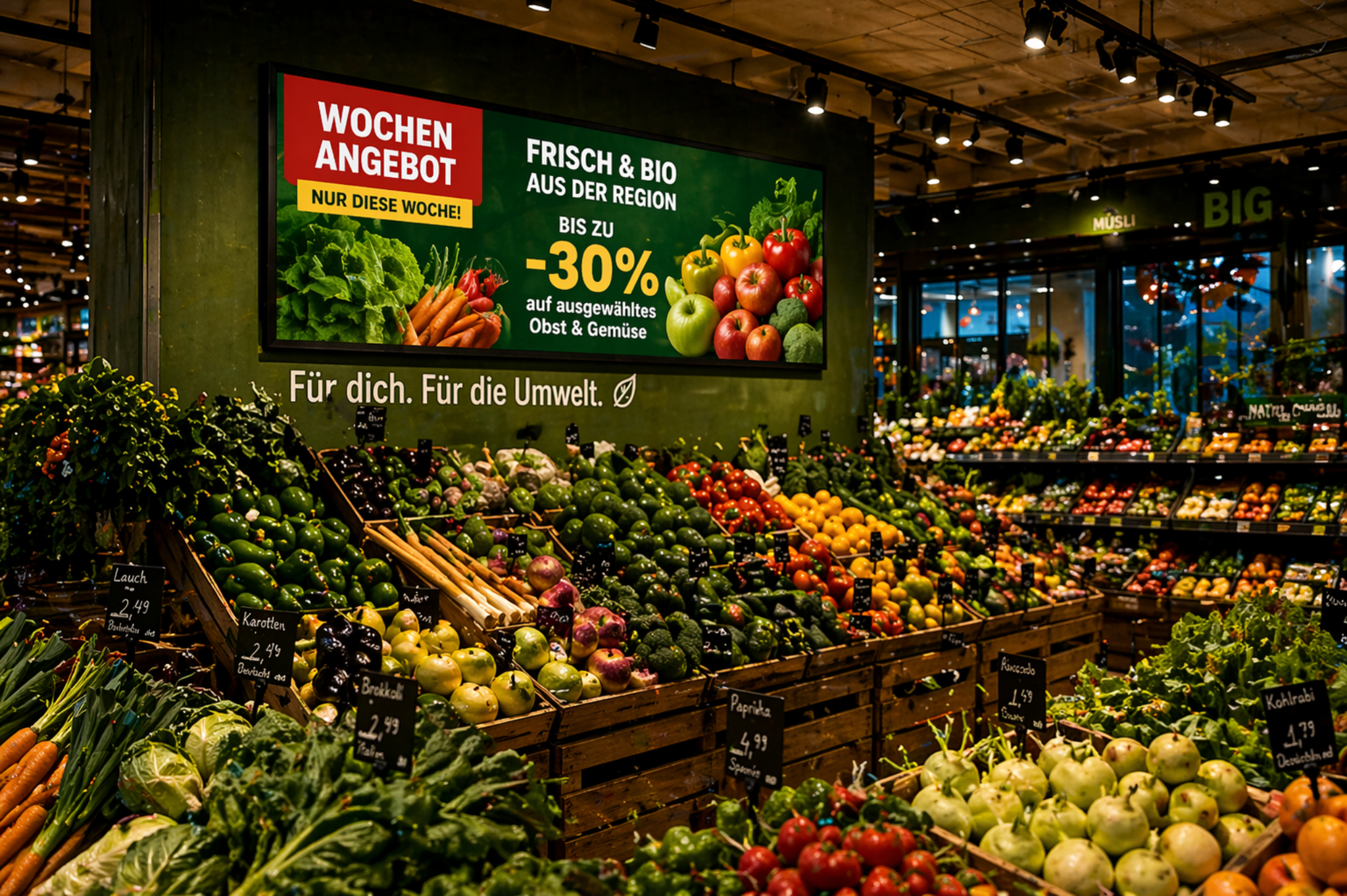
Do not start with third-party advertising — start with a platform that strengthens sales and owned communication internally from day one.
Organic supermarkets combine customer footfall, strong product values, local relevance and products that often require explanation. That is why the first sensible step is not pure monetisation, but a digital communication layer that helps the store itself.
The location has attention, values and product stories — but the strongest lever initially lies in its own sales activation.
In an organic supermarket, recurring customers, clear brand values, explainable assortments and seasonal offers come together directly in the store. At the same time, posters, flyers and isolated promotion areas compete for attention.
This leaves potential untapped: promotions are not staged strongly enough, origin and sustainability stories disappear, private labels lose visibility and additional purchase impulses are created too inconsistently.
The organic supermarket becomes a centrally controlled communication platform — first for the store’s own priorities.
Digital screens in-store and in the storefront combine promotions, seasonal campaigns, private labels, origin stories, sustainability topics, recipes and local notices in one professional visual layer.
Recruiting can run alongside this. The decisive point, however, is that the platform must work internally first. Only once content, acceptance, control and impact are in place does the same infrastructure become a credible retail media option.
Four layers that connect store communication, sales activation and later monetisation.
Promotions, private labels, seasonal themes and regional notices become visible in a flexible and centrally controlled way.
Promotional items, themes, recipes and recommendations can be placed closer to the purchase moment.
Employer messages can be integrated, but they are a secondary lever rather than the core promise of the case.
Once the internal platform is established, manufacturer budgets, co-op advertising and regional partners can be added credibly.
Because existing store traffic first strengthens sales and product communication — and only then becomes a media surface.
This case is powerful precisely because it does not need to begin as an advertising-only model. The first value is created in the store’s own communication and sales activation.
Measure internal impact first — then build retail media properly.
An organic supermarket is a strong retail blueprint when the platform is first designed as a sales and communication system.
This case shows that digital displays in organic retail can do more than classic advertising: they make promotions more visible, strengthen assortment and sustainability narratives and create the foundation for a later media model.
That is what makes the project strategically credible: internal value first, then scale, then additional revenue logic.