
Digital Signage Use Case — Restaurants, Cafés, Hotel Lobbies & Food Courts
How digital screens in restaurants, cafés, bakeries, hotels or food courts can primarily increase the venue’s own revenue through daily offers, menus, upselling and time-based promotions.
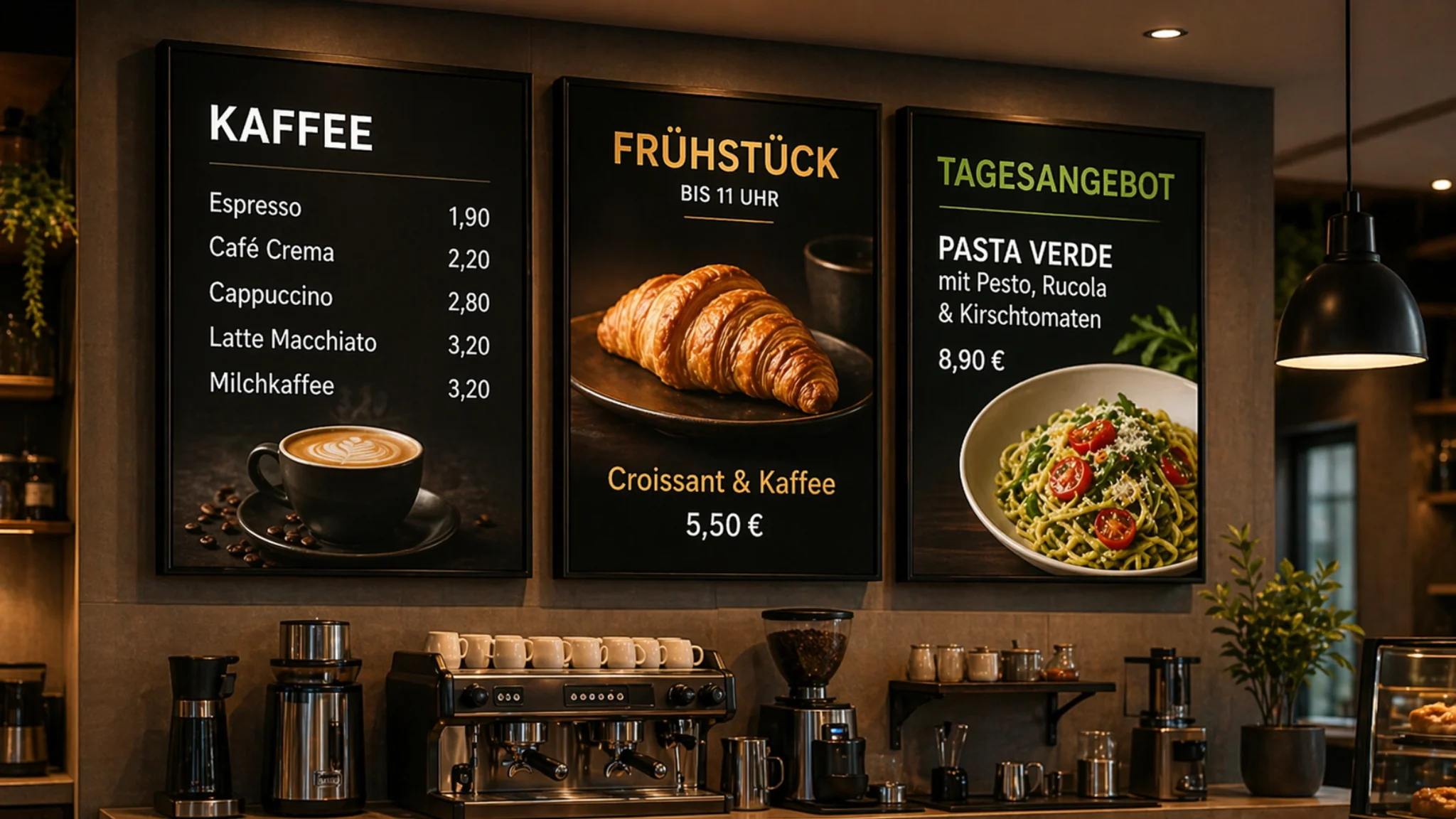
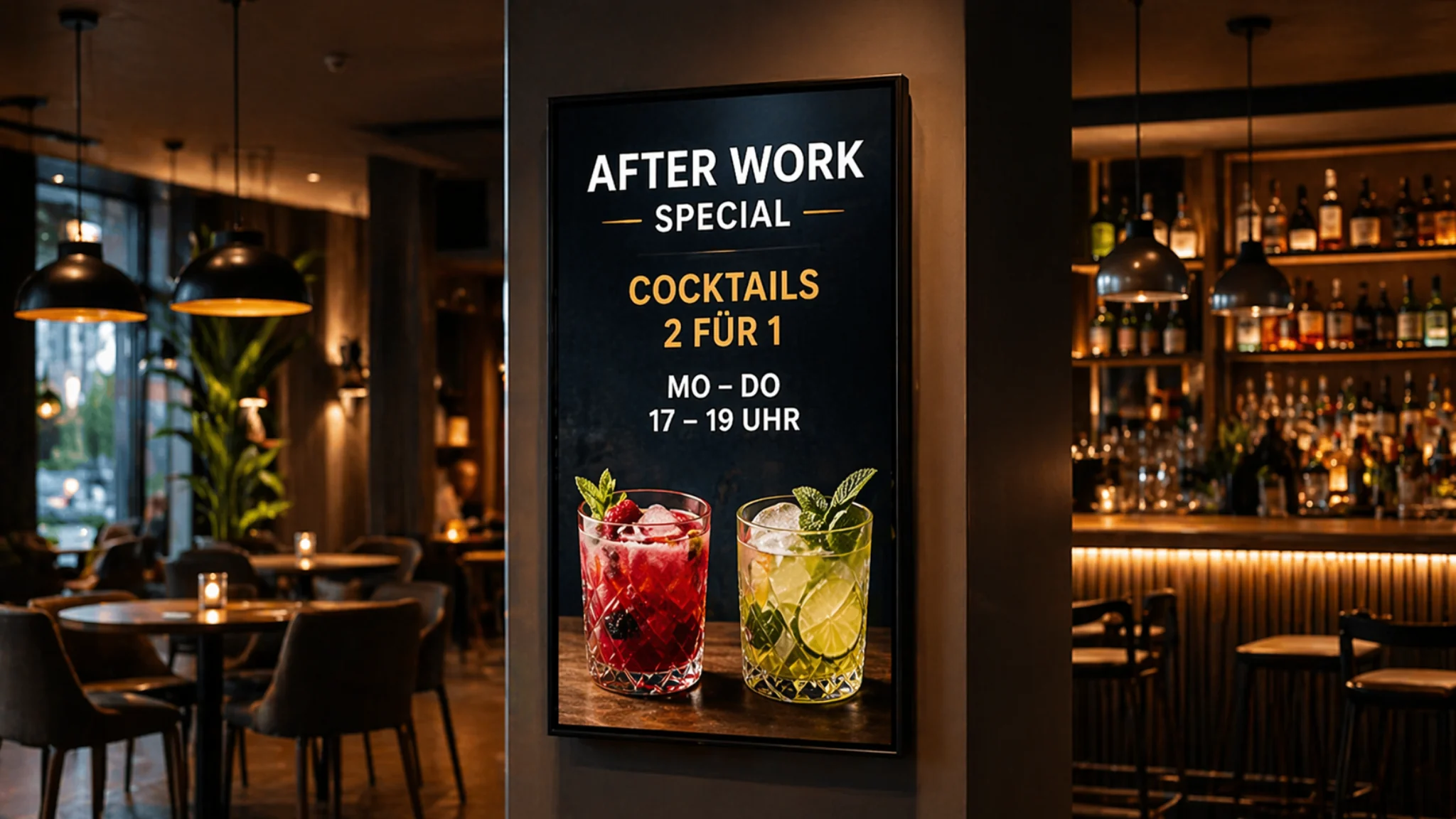
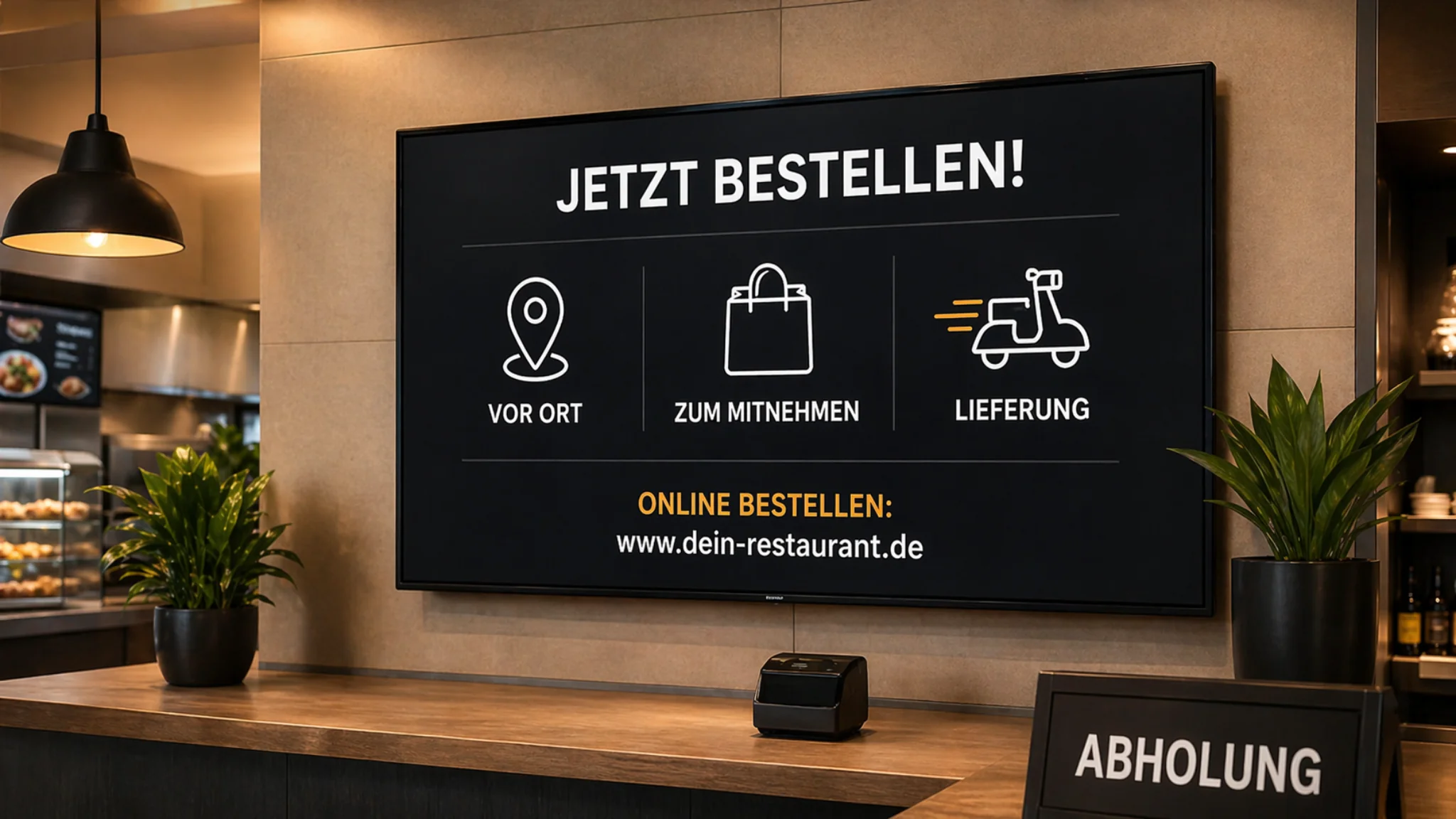
More visibility inside day-to-day operations — from the first screen to a clean rollout.
Do not think about third-party advertising first — think about more revenue per guest.
In hospitality, the strongest lever is usually not recruiting or pure monetisation, but better visibility for the venue’s own offers: menus, daily specials, drinks, desserts, add-ons, events and time-based promotions.
The offer exists — but many revenue levers are still not communicated strongly enough.
Restaurants, cafés, bakeries, food courts and hotels operate with changing offers, dayparts, peaks and strongly situational purchase decisions.
Many revenue opportunities remain underused: daily specials are not highlighted well enough, add-on sales are not staged consistently, desserts and drinks remain secondary and promotions lose impact without current communication.
The venue becomes a centrally controlled sales and communication surface.
Digital screens can present menus, daily specials, breakfast, lunch, happy hour, desserts, drinks, takeaway offers, events and seasonal highlights exactly when the purchase decision is happening.
The primary value therefore lies clearly in the venue’s own revenue. Third-party advertising or partner campaigns may be possible as a secondary layer, but they should not overshadow the core promise of the case.
Four layers that connect revenue, atmosphere and operational flexibility.
Daily specials, breakfast, lunch, evening trade and happy hour can be updated and presented professionally.
Drinks, desserts, side dishes, bundles and extras become visible at the right moment.
The location feels more modern, more structured and more professional — especially in hospitality settings with dwell time.
Selected local cooperations, sponsors or special campaigns can be integrated without losing the focus on owned revenue.
Because visibility at the right moment can directly improve ticket size and daypart performance.
In hospitality, the strongest lever is usually the venue’s own revenue.
Test impact and content logic at one site first — then roll it out.
A strong blueprint for hospitality when digital signage is designed consistently as a revenue lever.
This case shows that screens in hospitality can be far more than decoration. Used correctly, they support offer control, add-on sales, dwell quality and operational flexibility.
That is exactly why hospitality is a strong vertical — not because of recruiting, but because of visible commercial impact on owned revenue.