
Digital Signage Use Case — Healthcare Environment & Waiting Area
Using a modern practice as an example: how owned communication, patient information and private-pay or IGeL-style services can be made visible without compromising seriousness.

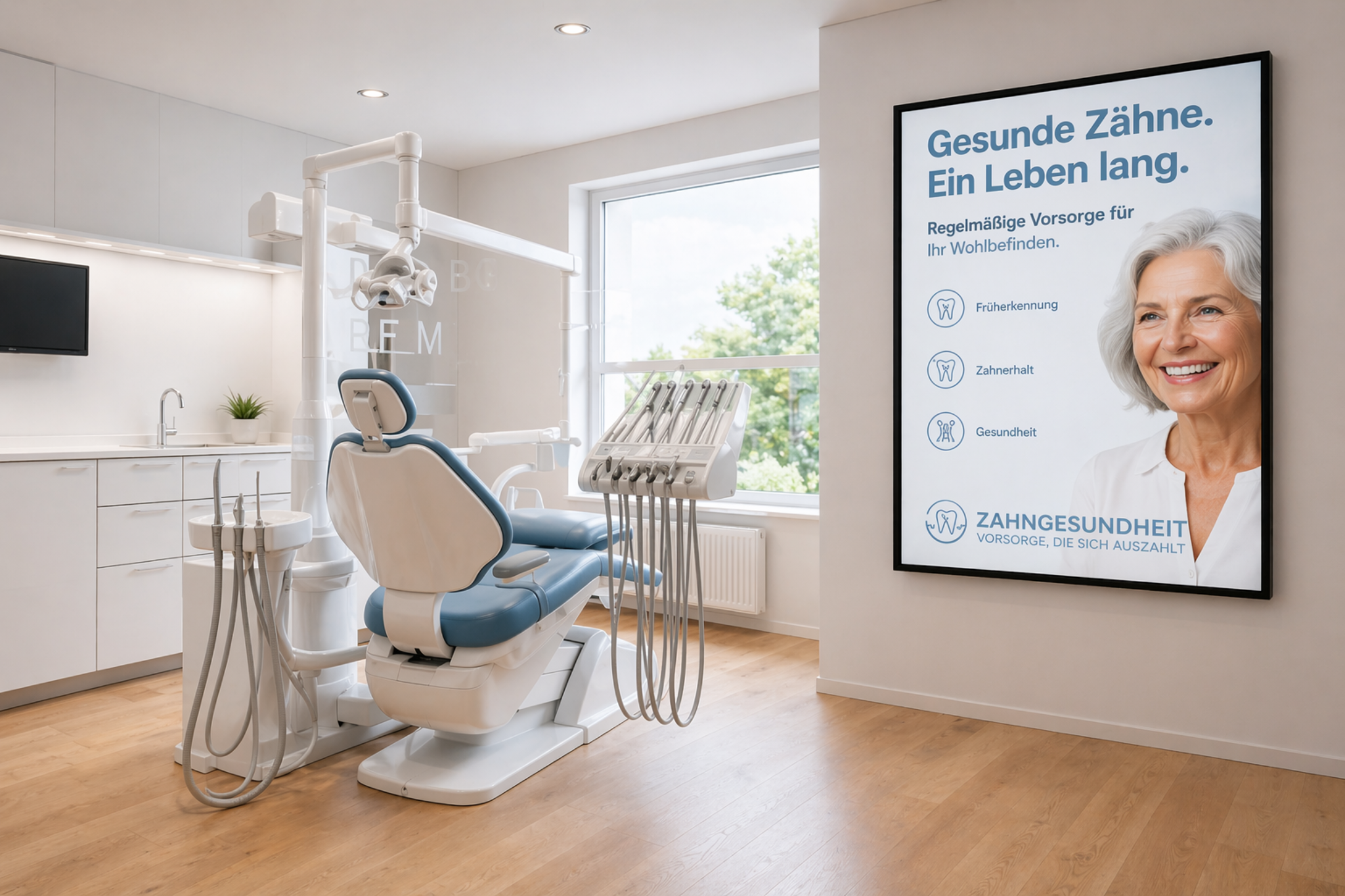
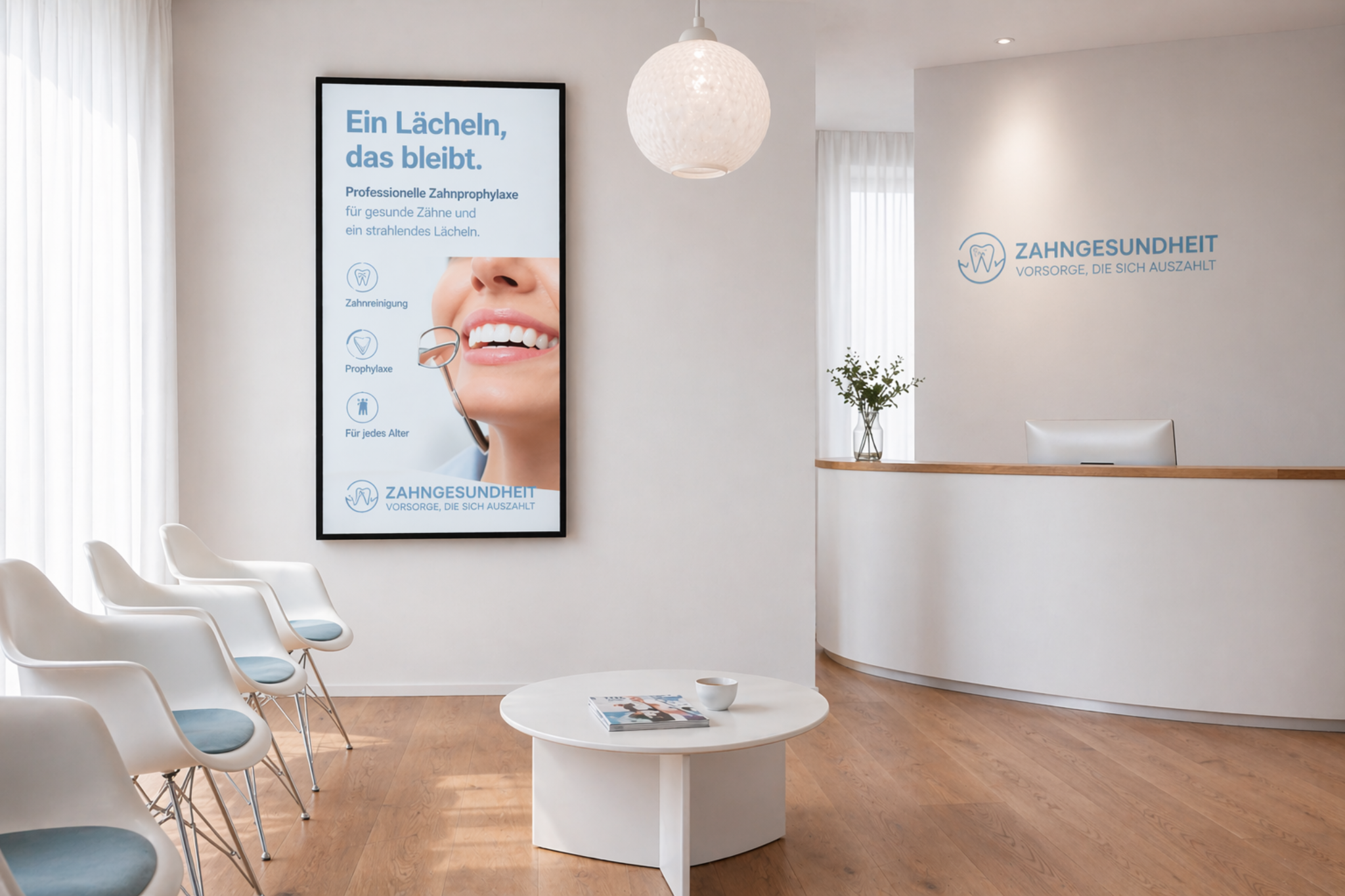
How a waiting area can inform, guide and present relevant additional services in a premium way at the same time.
Healthcare settings provide genuine attention: people wait, orient themselves, absorb content more consciously and still expect credibility. That is exactly why the environment is both sensitive and valuable.
Many practices offer relevant additional services — but these are often under-explained or under-presented in everyday operations.
In many practices, medical centres and clinic-adjacent environments, there is already dwell time, recurring patient contact and a clear need for information, orientation and trust-building.
At the same time, private-pay services, prevention offers, prophylaxis and other relevant services often remain below their communication potential: posters feel improvised, flyers disappear and important cues are not always communicated consistently.
The waiting area becomes a curated communication surface — with a clear focus on the practice’s own services.
Digital screens in a practice environment combine owned communication, service and patient information with premium visibility for relevant additional services in one calm, credible overall experience.
The key is not merely the screen itself, but the logic behind it: which content genuinely helps patients, what fits professionally and how can private-pay or IGeL-style services be presented informatively rather than aggressively?
Four layers that connect medical communication and commercial logic.
Additional services, prevention, prophylaxis and comparable offers can be presented clearly, consistently and in a premium way.
Important notices, process information and health-related content reduce recurring questions and improve orientation and the waiting experience.
The practice appears more modern, more structured and more professional without becoming overly commercial.
Selected healthcare-related or local offers may be integrated only very selectively and under strong control.
Because existing attention helps present relevant additional services in a clear and credible way.
In healthcare, commercial value is often created not through volume, but through relevance, credibility and disciplined curation.
First define the right communication logic for one location — then transfer it to additional sites.
A model for healthcare locations that want to approach communication in a more premium and commercially intelligent way.
This case shows that digital screens in healthcare can be far more than information monitors. When designed correctly, they combine service, orientation, owned communication and the visible presentation of relevant additional services within a credible framework.
This turns the practice case into a blueprint for other sensitive environments where trust, dwell time and relevant communication come together.